
An ISO 9001 internal audit is a systematic, first-party assessment conducted by trained personnel within your own organisation to verify that your quality management system (QMS) conforms to the requirements of ISO 9001:2015 and is effectively implemented and maintained. It is not a box-ticking exercise. Done well, it is the most powerful diagnostic tool your organisation has.
The audit operates within the Plan-Do-Check-Act (PDCA) framework, which underpins the entire ISO 9001:2015 standard. Each audit cycle involves four core elements:
- Scope: the processes, departments, or clauses under review
- Criteria: the requirements against which conformity is assessed, typically ISO 9001 clauses and your own documented procedures
- Evidence: objective records, observations, and interviews gathered during the audit
- Findings: documented conclusions including nonconformities, observations, and improvement opportunities
Auditors must maintain impartiality throughout. ISO 9001 clause 9.2.2 is explicit: no one audits their own work. In small organisations where this creates a logistical challenge, a colleague from a different function or a peer arrangement with another organisation can satisfy the independence requirement. The audit's purpose is to provide QMS conformity assurance and generate insights that feed directly into management review and continual improvement.
Table of Contents
- Why internal audits matter more than most organisations realise
- The principles that make an internal audit credible
- How to select and train internal auditors in UK organisations
- How to design your audit criteria, procedures, and programme
- Reporting findings and driving continual improvement
- How AI-powered platforms are changing the ISO 9001 audit process in the UK
- Intelligentassessments brings your audit programme into one place
- Key takeaways
Why internal audits matter more than most organisations realise
The ISO 9001 internal audit is often treated as a compliance obligation to satisfy before the certification body arrives. That framing misses the point entirely. Used properly, it is a feedback mechanism that gives top management a clear, evidence-based picture of how the QMS is actually performing, not how it is supposed to perform on paper.
The practical benefits are substantial:
- Nonconformity identification: audits surface gaps between documented procedures and actual practice before an external auditor does
- Risk visibility: a well-scoped audit highlights processes where failure would have the greatest impact on quality or customer satisfaction
- Certification readiness: organisations that audit thoroughly and regularly rarely face surprises during surveillance or recertification visits
- Operational performance: findings feed into corrective actions that genuinely improve how work gets done, not just how it is recorded
- Management confidence: audit reports give leadership the evidence they need to allocate resources and prioritise improvement activity
The shift from compliance-focused to performance-focused auditing is where the real value lies. An audit that asks "does this procedure exist?" tells you almost nothing. An audit that asks "is this process producing the outcomes it was designed to produce?" tells you everything.
Pro Tip: Use a risk-based approach to prioritise audit scope. Processes with a history of nonconformities, recent changes, or high customer impact should receive more audit attention than stable, low-risk areas. This concentrates your limited audit resource where it will find the most meaningful issues.
The principles that make an internal audit credible
ISO 19011:2018, the international guidelines for auditing management systems, sets out the principles that govern effective auditing. These are not aspirational values; they are the foundation on which audit credibility rests.
- Integrity: auditors act with honesty and responsibility. Findings are reported accurately, whether they reflect well on the organisation or not.
- Objectivity: conclusions are based on evidence, not on assumptions, relationships, or organisational politics.
- Confidentiality: audit information is handled with discretion and shared only with those who need it.
- Competence: auditors have the knowledge, skills, and experience to assess the processes they are reviewing. Competence is not assumed; it is demonstrated and developed through training.
- Evidence-based approach: effective internal audits focus on objective evidence, including records, direct observations, and employee interviews, rather than simply ticking a checklist.
The independence requirement deserves particular emphasis. An auditor who is reviewing a process they manage, or who has a personal stake in its outcome, cannot be objective. This is not a procedural nicety; it is the reason audit findings can be trusted. Where genuine independence is difficult to achieve internally, organisations should consider cross-functional audit arrangements or supplementary external support.
Competence and impartiality together determine whether an audit produces findings that management can act on with confidence. Internal auditors need strong training and organisational support to fulfil their role effectively, and building that capability is a deliberate investment, not an afterthought.

How to select and train internal auditors in UK organisations
Selecting the right people to conduct internal audits is one of the decisions that most directly affects audit quality. The criteria matter.
A suitable internal auditor should have:
- A working knowledge of ISO 9001:2015 requirements, particularly the clauses relevant to the processes being audited
- Familiarity with the organisation's own documented procedures, quality objectives, and operational context
- The ability to gather and evaluate objective evidence without bias
- Communication skills sufficient to conduct interviews, ask probing questions, and present findings clearly
- Formal auditor training from a recognised programme
Internal auditors can be trained employees, not external consultants, provided they maintain impartiality and objectivity. This makes internal auditor development a practical and cost-effective route for most UK organisations.
The most widely recognised formal qualification in the UK is the CQI IRCA ISO 9001:2015 Internal Auditor course, available through providers including Make UK. This qualification equips delegates with the knowledge and techniques to plan, conduct, and report internal audits against ISO 9001:2015.
| Training element | Typical content |
|---|---|
| QMS fundamentals | ISO 9001:2015 structure, clauses, and PDCA framework |
| Auditing principles | ISO 19011:2018 principles, auditor roles, independence requirements |
| Audit planning | Scope definition, criteria setting, audit plan preparation |
| Conducting the audit | Interview techniques, evidence gathering, observation methods |
| Reporting and follow-up | Writing findings, grading nonconformities, corrective action process |
| Practical exercises | Role-play audits, checklist application, report writing practice |
Beyond formal qualification, auditors develop competence through practice. Pairing a newly trained auditor with an experienced lead auditor for their first two or three audit cycles accelerates skill development considerably. The lead auditor role carries specific responsibilities: setting the audit plan, managing the audit team, making real-time adjustments to scope if issues emerge, and producing the final report.
How to design your audit criteria, procedures, and programme
The audit programme is the overarching plan that governs all internal audit activity across a defined period, typically a year. ISO 9001 clause 9.2.2 requires organisations to plan and implement an audit programme that takes into account the importance of processes, organisational changes, and the results of previous audits. That last point is often underused: past audit findings are one of the most reliable indicators of where future audits should focus.
Defining audit criteria means specifying the requirements against which conformity will be assessed. These typically include:
- The relevant clauses of ISO 9001:2015
- The organisation's own documented procedures and work instructions
- Customer requirements and contractual obligations
- Applicable regulatory or statutory requirements
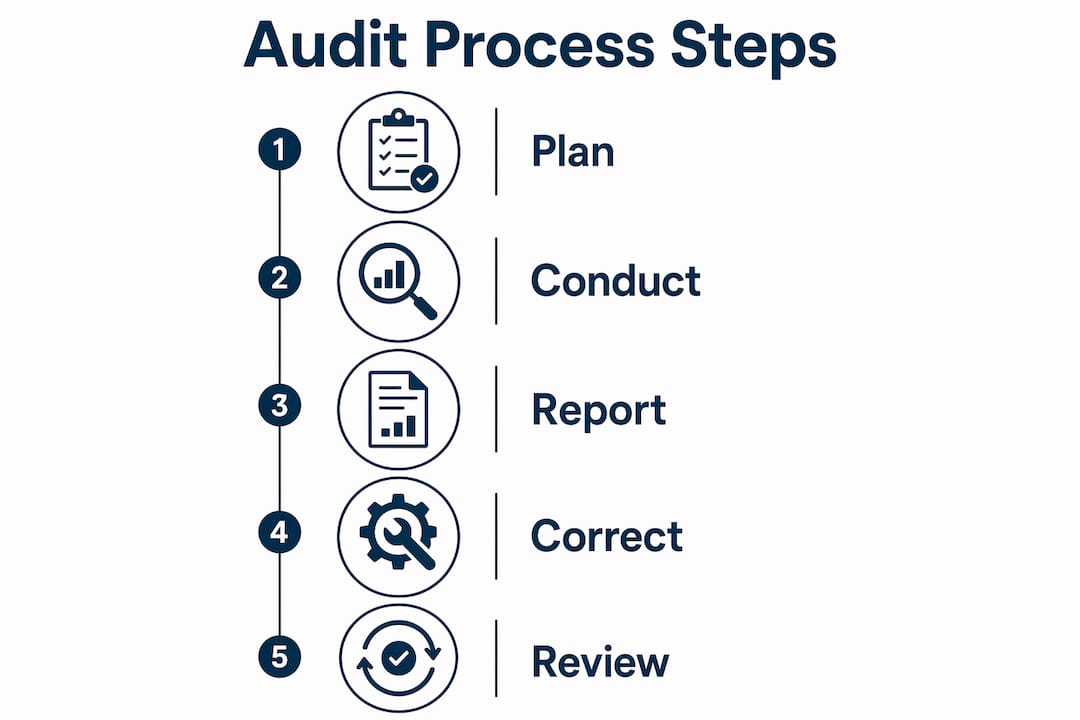
The audit procedure covers the four stages every audit follows:
- Planning: define scope, criteria, objectives, and schedule; notify the auditee; prepare the checklist
- Conducting: open meeting, evidence gathering through interviews, observation and record review, closing meeting
- Reporting: document findings, grade nonconformities, issue the audit report
- Follow-up: verify corrective actions have been implemented and are effective
A well-structured ISO 9001 audit checklist organises questions by clause from 4 through 10 and asks for objective evidence rather than yes/no answers. The difference between "Is there a quality policy?" and "Can someone on the shop floor explain what the quality policy means for their work?" is the difference between a checklist that confirms documentation exists and one that tells you whether the QMS is actually working.
Pro Tip: Do not attempt to cover every clause in a single audit session. ISO 9001 allows you to distribute your audit programme across multiple sessions throughout the year, covering different processes or clauses in each. A focused two-hour audit of Clause 8 operations will surface more genuine issues than a rushed full-day sweep of the entire standard.
For organisations that also operate ISO 27001, the same programme design logic applies. An ISO 27001 audit plan follows identical structural principles: scope, criteria, schedule, and risk-based prioritisation. The ISO 27001 internal audit checklist addresses information security controls rather than quality processes, but the auditing methodology is the same. Many UK organisations that hold both certifications run integrated audit programmes to reduce duplication and make better use of auditor time.
Reporting findings and driving continual improvement
Every internal audit must produce a written report. This is not optional; ISO 9001 requires documented information to be retained as evidence that the audit programme has been implemented and that findings have been addressed.
A complete audit report includes:
- Audit scope, objectives, and criteria
- Dates, locations, and processes covered
- Names of the auditor(s) and auditees
- A summary of findings, both positive and negative
- All nonconformities raised, graded, and referenced to specific clauses
- Agreed corrective actions with owners and target dates
- The auditor's overall conclusion on QMS conformity
Audit findings are classified as major nonconformities, minor nonconformities, observations, or opportunities for improvement. The distinction matters. A major nonconformity indicates a systemic failure or the complete absence of a required element; it can block certification until resolved. A minor nonconformity is an isolated lapse where the system intent is evident. Observations and opportunities for improvement allow auditors to guide the organisation beyond minimum compliance without raising a formal nonconformity.
Each nonconformity requires a corrective action with three components: the immediate fix, a root cause analysis, and a longer-term action to prevent recurrence. The audit report and resulting corrective actions must be presented at the next management review meeting. This is the mechanism by which audit findings translate into genuine system improvement rather than sitting in a folder until the next external audit.
Aim to complete your internal audit at least six to eight weeks before any scheduled certification body visit. That window gives you time to raise corrective actions, conduct root cause analysis, implement fixes, and gather evidence that the actions have been effective.
How AI-powered platforms are changing the ISO 9001 audit process in the UK
The traditional approach to internal auditing, built on spreadsheets, paper checklists, and email chains, creates problems that are easy to overlook until they become urgent. Evidence gets lost. Corrective actions go untracked. Audit reports sit in shared drives with no visibility for management. The audit programme becomes a compliance exercise rather than a management tool.

AI-powered platforms address these problems directly. Intelligentassessments is an AI-driven SaaS platform that digitises the entire audit and compliance review process, replacing spreadsheets with structured assessment frameworks, automated evidence management, and real-time dashboards. For UK organisations in regulated utilities and infrastructure sectors, where audit trails and governance accountability are non-negotiable, this shift from manual to digital audit management has practical consequences for how assurance is delivered.
| Capability | Traditional approach | AI-powered platform |
|---|---|---|
| Audit scheduling | Manual calendar entries, email reminders | Automated programme scheduling with alerts |
| Checklist management | Static Word or Excel templates | Dynamic, structured frameworks with clause mapping |
| Evidence collection | Email attachments, paper files | Centralised evidence repository with version control |
| Finding classification | Manual grading, free-text notes | Structured finding types with weighted RAG scoring |
| Reporting | Manual report writing, formatting | Automated AI executive summaries, instant PDF export |
| Management visibility | Periodic email updates | Real-time dashboards accessible to leadership |
| Corrective action tracking | Separate spreadsheet or email thread | Integrated follow-up workflow with status tracking |
The practical gain is not just efficiency. When audit evidence is centralised and findings are tracked in real time, management can see the state of the QMS at any point, not just when a report lands in their inbox. Automated agreement workflow automation and document control integrations further reduce the administrative overhead that consumes auditor time without adding audit value.
Pro Tip: When moving to a digital audit platform, migrate your existing audit criteria and checklist questions into the platform's framework templates before your next audit cycle. This preserves institutional knowledge while immediately giving you the evidence management and reporting benefits. Do not start from scratch; build on what already works.
UK data protection obligations under the UK GDPR apply to any platform handling audit evidence that includes personal data, such as employee interview records or competence assessments. Intelligentassessments is built for regulated UK organisations, with secure data access and controls designed to meet these requirements.
Intelligentassessments brings your audit programme into one place
Spreadsheets and disconnected documents are not an audit programme. They are a liability. Intelligentassessments gives quality and assurance leaders in regulated UK organisations a single platform where audit frameworks, evidence, findings, corrective actions, and management reporting all live together, with AI-generated executive summaries and weighted RAG scoring that make the state of your QMS visible at a glance.
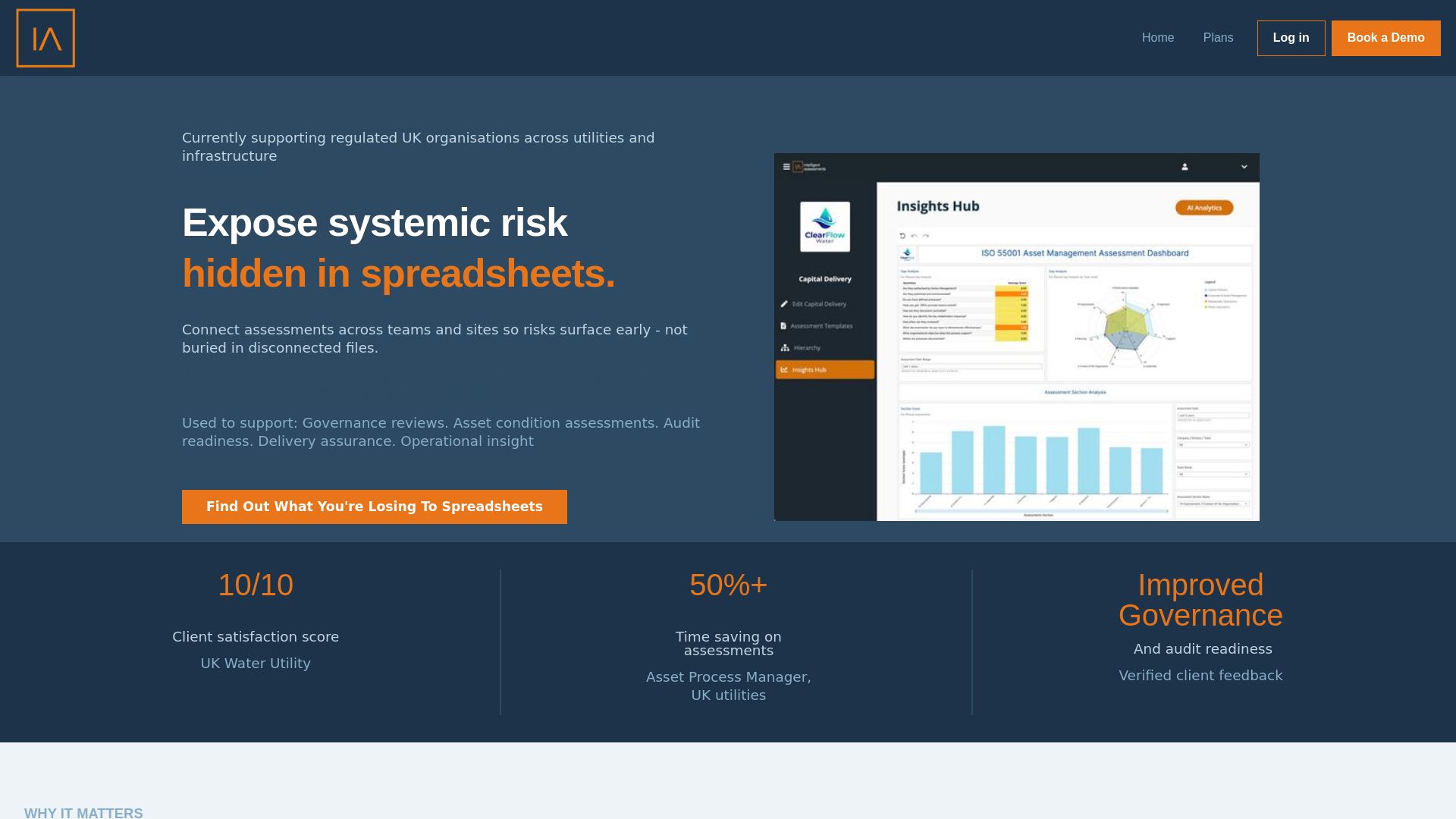
The platform suits organisations that need to run structured, repeatable audit programmes across multiple processes or sites without the overhead of manual report assembly and chasing corrective actions by email. Template libraries cover ISO 9001 and a range of other assessment use cases, so your audit criteria are structured from day one rather than rebuilt each cycle. For teams that have outgrown spreadsheets but are not yet ready to commission a bespoke system, it is a practical, subscription-based route to professional-grade audit management.
Book a demo to see how Intelligentassessments handles audit scheduling, evidence management, and real-time reporting for regulated UK organisations.
Key takeaways
A well-run ISO 9001 internal audit programme, grounded in risk-based thinking, trained auditors, and structured reporting, is the most reliable way to keep your QMS genuinely effective rather than merely certified.
| Point | Details |
|---|---|
| Auditor independence is non-negotiable | No one audits their own work; use cross-functional or peer arrangements where needed. |
| Risk-based scheduling improves outcomes | Prioritise audit frequency and scope around high-risk, high-impact, or recently changed processes. |
| Finding classification drives action | Grade every finding as major nonconformity, minor nonconformity, observation, or opportunity for improvement to determine the correct follow-up. |
| Formal training builds credible auditors | CQI IRCA ISO 9001:2015 Internal Auditor qualification is the recognised UK standard for internal auditor competence. |
| Intelligentassessments digitises the full cycle | The platform replaces spreadsheets with structured frameworks, evidence management, and real-time dashboards for regulated UK organisations. |